Contact: +91 844 894 1008
श्रीभगवानुवाच |
बहूनि मे व्यतीतानि जन्मानि तव चार्जुन |
तान्यहं वेद सर्वाणि न त्वं वेत्थ परन्तप || 5||
śhrī bhagavān uvācha
bahūni me vyatītāni janmāni tava chārjuna
tānyahaṁ veda sarvāṇi na tvaṁ vettha parantapa
BG 4.5: The Supreme Lord said: Both you and I have had many births, O Arjun. You have forgotten them, while I remember them all, O Parantapa.
श्रीभगवानुवाच |
बहूनि मे व्यतीतानि जन्मानि तव चार्जुन |
तान्यहं वेद सर्वाणि न त्वं वेत्थ परन्तप || 5||
The Supreme Lord said: Both you and I have had many births, O Arjun. You have forgotten them, while I …
Sign in to save your favorite verses.
Sign InStart your day with the timeless inspiring wisdom from the Holy Bhagavad Gita delivered straight to your email!


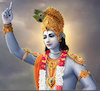

Shree Krishna explains that merely because he is standing before Arjun in the human form, he should not be equated with human beings. The president of a country sometimes decides to visit the prison, but if we see the president standing in the jail, we do not erroneously conclude that he is also a convict. We know that he is in the jail merely for an inspection. Similarly, God sometimes descends in the material world, but he is never divested of his divine attributes and powers.
In his commentary upon this verse, Shankaracharya states: yā vāsudeve anīśhvarāsarvajñāśhaṅkā mūrkhāṇāṁ tāṁ pariharan śhrī-bhagavān uvācha (Gītā Bhāṣhya on verse 4.5)[v2] “This verse has been spoken by Shree Krishna to refute foolish people who doubt that he is not God.” Non-believers argue that Shree Krishna too was born like the rest of us, and he ate, drank, slept, like we all do, and so he could not have been God. Here, Shree Krishna emphasizes the difference between the soul and God by stating that although he descends in the world innumerable times, he still remains omniscient, unlike the soul whose knowledge is finite.
The individual soul and the Supreme Soul, God, have many similarities—both are sat-chit-ānand (eternal, sentient, and blissful). However, there are also many differences. God is all-pervading, while the soul only pervades the body it inhabits; God is all-powerful, while the soul does not even have the power to liberate itself from Maya without God’s grace; God is the creator of the laws of nature, while the soul is subject to these laws; God is the upholder of the entire creation, while the soul is upheld by him; God is all-knowing, while the soul does not have complete knowledge even in one subject.
Shree Krishna calls Arjun in this verse as “Parantapa,” meaning “subduer of the enemies.” He implies, “Arjun, you are a valiant warrior who has slayed so many powerful enemies. Now, do not accept defeat before this doubt that has crept into your mind. Use the sword of knowledge that I am giving you to slay it and be situated in wisdom.”